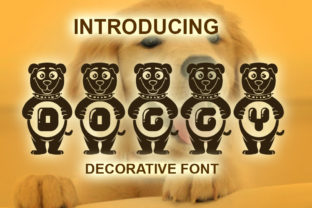
Doggy: A Playful Decorative Font for Campaign Creativity
As a social media strategist working on a seasonal sale campaign, I often find myself in the position of selecting fonts that can elevate a design from ordinary to engaging. Recently, I came across Doggy, a decorative font that immediately caught my eye with its unique charm and playful aesthetic. The letters are packed in cute bears, giving the font a whimsical feel that’s perfect for creating eye-catching visuals. When I first tested it in a mock-up for a birthday card graphic, I knew I had found something special.
Doggy for Birthday Cards and Festive Branding
Doggy is designed to bring a sense of fun and playfulness to any project. Its bear-shaped letterforms add a layer of personality that’s hard to replicate with standard fonts. For a recent birthday card campaign, I used Doggy as the primary typeface, pairing it with a clean sans serif font for contrast. The result was a visually balanced design that felt both festive and professional. It worked exceptionally well for short headlines and decorative titles, making it ideal for decorative use cases like holiday cards, party banners, and promotional flyers.
One of the key advantages of Doggy is its ability to convey warmth and friendliness. This makes it particularly effective for campaigns targeting younger audiences or family-oriented brands. Whether it's a birthday invitation or a seasonal sale banner, Doggy adds an emotional touch that can help build brand recognition and audience engagement.
Doggy for Instagram Posts and Visual Storytelling
In the fast-paced world of social media, visual appeal is everything. I recently used Doggy in a series of Instagram posts for a product launch, and the response was overwhelmingly positive. The font’s playful nature made the content feel more approachable and relatable, which is crucial for building trust with followers.
When designing Instagram posts, readability is a top priority. I tested Doggy on mobile previews and found that it performed well even at smaller sizes, especially when paired with a bold sans serif font for contrast. However, I recommend using Doggy sparingly—saving it for headlines, callouts, and decorative elements rather than long paragraphs. This ensures that the message remains clear while still maintaining the font’s signature charm.
For decorative use cases like quote graphics or branded templates, Doggy can be a game-changer. Its whimsical style works well with colorful backgrounds and vibrant imagery, making it a versatile choice for creative campaigns. Just be mindful of the platform you're using; some platforms may require additional adjustments for optimal display.
Doggy for Web Design and Digital Ads
When it comes to web design, Doggy shines in areas where visual hierarchy and brand personality matter most. I used it on a landing page header for a new online course, and the effect was immediate. The font’s playful tone aligned perfectly with the course’s lighthearted theme, making the entire design feel cohesive and inviting.
For digital ads, Doggy can help your message stand out in a crowded feed. Its unique shape and color make it highly visible, even on small thumbnails. However, it’s important to consider the context. Doggy may not be the best choice for formal corporate communication or dense information-heavy content, where clarity and professionalism take precedence.
Pairing Doggy with a clean, modern sans serif font can create a striking contrast that enhances readability without sacrificing style. This combination works well for decorative use cases like website banners, email promotions, and branded templates. Always check the font’s file formats and licensing before using it in client campaigns or commercial projects.
Doggy for Brand Identity and Creative Typography
Building a strong brand identity often starts with typography. Doggy offers a fresh and memorable option for those looking to inject personality into their designs. Its playful style can be a powerful tool for creating a unique brand voice, especially for lifestyle brands, children’s products, or entertainment-related campaigns.
When considering font pairing, think about the overall mood you want to convey. A decorative font like Doggy can work beautifully with a minimalist serif or script font to create a balanced look. This flexibility makes it a great choice for designers who want to experiment with different typographic styles without compromising on quality or consistency.
Before finalizing any design, always test Doggy across different platforms and devices. Pay attention to how it looks on dark and light backgrounds, and ensure that it remains legible in fast-scrolling feeds. These small details can make a big difference in how your audience perceives your brand.